What Is the Best China Data Center AI Server Manufacturer?

Time:2026-09-12 Author:Liam
0%

Choosing the best data center ai server manufacturer in China requires more than comparing processor names or promotional prices. A reliable decision begins with workload evidence. Can the server support large language model training, inference, virtualization, and high-density storage? Can it maintain stable performance inside a busy rack? These questions matter when each cabinet draws substantial power and produces intense heat.

Jensen Huang, NVIDIA’s founder and CEO, has said, “The data center is the computer.” His observation explains why a server should not be judged alone. The complete system matters. Buyers should examine GPU compatibility, interconnect bandwidth, liquid or air cooling, power distribution, firmware stability, and long-term maintenance. A strong data center ai server manufacturer should also provide clear benchmark methods, documented component origins, responsive technical support, and deployment experience in comparable facilities.

China has several capable manufacturers, but “best” depends on the buyer’s environment. A research laboratory may prioritize flexible GPU configurations. A cloud provider may value fleet management and predictable replacement cycles. An enterprise may need quieter operation, stronger security controls, and local service coverage. Certification and regulatory alignment should never be treated as paperwork after purchase.

Some comparisons remain imperfect. Published benchmarks rarely reproduce real production traffic. Cooling results can change with rack design, altitude, and room airflow. Even an excellent server may disappoint when integration is weak. This guide therefore evaluates manufacturers through practical evidence, not slogans. Look closely. Ask difficult questions. The most trustworthy choice is usually the one that explains limitations as clearly as it presents strengths.
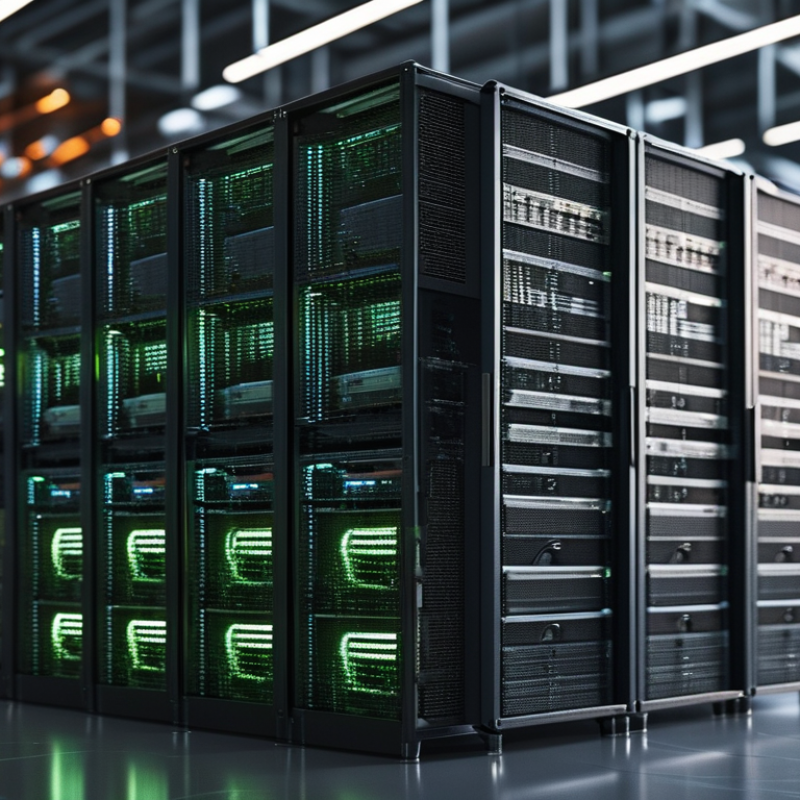
What Is the Best China Data Center AI Server Manufacturer?

Definition and Role of AI Server Manufacturers in China

In China, an AI server manufacturer is more than a seller of powerful hardware. It designs, assembles, tests, and supports server systems built for machine learning workloads. These systems commonly combine accelerator cards, high-speed memory, fast storage, and low-latency networking. That combination matters because training models can move enormous datasets through a rack within hours. Heat is not a side issue. Manufacturers also engineer airflow, liquid cooling options, power delivery, and rack-level monitoring. An experienced supplier should explain performance under sustained loads, not only quote peak specifications.

At a China data center, the manufacturer’s role continues after delivery. It may help operators validate electrical capacity, network topology, remote management, and software compatibility. Reliable teams document burn-in tests, component traceability, firmware controls, and replacement procedures. These details support uptime and make maintenance less dependent on guesswork. Security deserves equal attention. Access controls, secure updates, and documented data-handling practices should be discussed before deployment. Local service coverage can reduce delays when a fan, power module, or accelerator fails.

Choosing the best manufacturer is therefore a technical evaluation, not a popularity contest. Buyers should request workload-based benchmarks, thermal results, service-level terms, and references from comparable facilities. Generic benchmark scores can mislead. A server may perform well in a short test but throttle inside a crowded rack. Even careful evaluations have limits. Power prices, cooling conditions, supply availability, and changing processor generations can alter the result. That uncertainty requires honest communication and a willingness to revise the design. Sometimes, a slightly slower platform with stable support is the more dependable choice.

Core Technologies Used in China’s Data Center AI Servers

The best China data center AI server manufacturer should be judged by engineering depth, not product appearance. In real deployments, accelerator density, stable power delivery, and predictable maintenance matter most. A capable server combines high-performance AI processors with fast memory and efficient thermal control. Heat changes everything.

Core technology begins with the interconnect fabric. High-speed links allow processors to share data with less delay, improving model training and inference performance. Advanced memory systems also reduce bottlenecks when workloads process large language models or complex visual data. Latency matters. A poorly balanced design can waste expensive computing capacity.

Liquid cooling is becoming important as rack power increases. Cold plates, pumps, sensors, and leak detection must work together continuously. Server firmware should monitor temperature, voltage, fan speed, and component health. Reliable manufacturers also provide diagnostics, replacement procedures, and long-term firmware support. These details reveal practical experience.

Software compatibility is equally important. Optimized drivers, container support, scheduling tools, and security controls help administrators use hardware efficiently. Secure boot, access isolation, encrypted communication, and audit logs reduce operational risk. However, no design is perfect. Cooling systems can complicate maintenance, while dense computing may increase power costs. Buyers should test performance under sustained workloads, not rely only on short benchmark results.

Key Criteria for Comparing Chinese AI Server Manufacturers

Choosing the best China data center AI server manufacturer requires more than comparing GPU counts. A reliable evaluation starts with workload evidence. Ask for benchmark results using models similar to yours, not only laboratory demonstrations. Check GPU compatibility, memory capacity, storage speed, and high-speed networking. A server may look powerful but perform poorly when data movement becomes the bottleneck. Cooling design also matters. Inspect airflow paths, fan redundancy, liquid-cooling options, and noise levels in a real rack environment.

Tips: Request a sample configuration, power estimate, warranty terms, and recent customer references. Confirm whether engineers provide remote and on-site support. Review firmware update procedures and spare-part availability. Compliance documentation should be clear and current. Supply stability deserves attention too, especially for GPUs, network cards, and specialized cooling components. Total cost includes electricity, maintenance, software integration, and downtime. A lower purchase price can become expensive after twelve months.

I have found that transparent technical communication often reveals more than polished brochures. Ask difficult questions about failure rates, repair times, and performance under sustained loads. The answers may be incomplete. That is useful evidence. Compare several test reports under identical temperatures, power limits, and model settings. Also examine security controls, access management, logging, and data-handling practices. Some manufacturers offer impressive specifications but limited deployment experience. Others may lack perfect documentation while providing responsive engineering support. This trade-off deserves careful, independent verification before procurement.

What Is the Best China Data Center AI Server Manufacturer? - Key Criteria for Comparing Chinese AI Server Manufacturers

Evaluation Dimension Relevant Technical Fact or Benchmark What a Strong Manufacturer Should Offer Recommended Verification Method Suggested Weight
AI Accelerator Compatibility Modern AI training servers commonly support four- or eight-accelerator configurations, depending on the platform and thermal design. A clearly documented accelerator matrix, validated firmware, stable driver support, and options for current-generation domestic or international accelerators where legally permitted. Request a platform compatibility list, firmware release history, and a live training or inference demonstration. 20%
CPU and Memory Architecture Two-socket server platforms are widely used for high-performance computing. DDR5 server memory commonly operates at speeds such as 4,800 or 5,600 MT/s, subject to the processor and DIMM configuration. Balanced CPU-to-accelerator design, sufficient memory channels, ECC memory, and support for high-capacity registered DIMMs. Compare maximum memory capacity, memory channels, supported DIMM types, and measured CPU utilization during AI workloads. 10%
Interconnect and Network Bandwidth PCI Express 5.0 provides 32 GT/s per lane. AI clusters may use 100, 200, or 400 Gb/s Ethernet or InfiniBand-class networking, depending on the system architecture. High-speed network adapters, RDMA support, low-latency switching compatibility, and sufficient PCIe lanes for accelerators and network cards. Review bandwidth tests using collective communication workloads, including all-reduce, all-gather, and point-to-point latency. 15%
Storage Performance Enterprise NVMe drives are commonly connected through PCIe Gen4 or PCIe Gen5 interfaces. Actual performance depends on the drive, workload, queue depth, and RAID configuration. Hot-swappable NVMe bays, enterprise SSD qualification, boot-drive redundancy, and a storage layout optimized for datasets, checkpoints, and logs. Request sequential and random I/O results, endurance ratings, RAID-controller details, and drive replacement procedures. 8%
Thermal Management High-density accelerator servers can consume several kilowatts per chassis, and thermal performance directly affects sustained AI throughput and component life. Validated airflow design, redundant high-performance fans, temperature monitoring, and optional liquid-cooling support for high-density deployments. Ask for thermal test conditions, inlet-temperature limits, fan-failure behavior, acoustic data, and sustained-load results. 12%
Power Efficiency and Reliability Data-center servers generally use redundant hot-swappable power supplies, while efficiency varies according to load, power-supply rating, and system configuration. 80 PLUS-rated power supplies where applicable, redundant power paths, automatic fault alerts, and measured performance-per-watt data. Request power measurements at idle, typical AI load, and peak load, together with burn-in and failure-rate documentation. 10%
Firmware and Systems Management Enterprise servers typically use a baseboard management controller for remote monitoring, console access, firmware updates, and hardware alerts. Redfish or equivalent management support, role-based access control, centralized monitoring, audit logs, and secure firmware-update procedures. Inspect the management interface, API documentation, security settings, update policy, and integration with existing data-center tools. 8%
AI Software Ecosystem AI performance depends on the complete software stack, including operating systems, drivers, runtime libraries, frameworks, containers, and cluster schedulers. Validated software images, container support, Kubernetes or Slurm compatibility, documentation in English, and repeatable deployment procedures. Run a standardized model benchmark and confirm that the supplier can reproduce the result on the proposed configuration. 7%
Manufacturing Quality and Testing AI servers operate continuously under high thermal and electrical loads, making production testing and traceability important for long-term availability. Documented component traceability, factory burn-in, vibration and thermal testing, serial-number tracking, and a defined quality-management process. Review sample inspection reports, factory-acceptance procedures, corrective-action records, and quality certificates relevant to the destination market. 5%
Service, Warranty, and Spare Parts The practical value of a server depends on replacement-part availability, response time, remote support, and the supplier’s ability to maintain the configuration over its service life. Clearly defined warranty terms, regional technical support, spare-parts inventory, escalation procedures, and service-level commitments. Obtain a written support matrix covering response time, replacement time, software assistance, exclusions, and out-of-warranty repair pricing. 3%
Compliance and Export Readiness Electrical, electromagnetic-compatibility, environmental, cybersecurity, and export requirements vary by destination and by installed component. Complete product documentation, applicable conformity declarations, accurate country-of-origin information, and transparent handling of export-control restrictions. Verify certificates, customs documents, component classifications, data-security requirements, and the legal status of the exact configuration. 2%
Total Evaluation Weight 100%

Note: The benchmarks above are technology and procurement criteria rather than manufacturer-specific claims. Final selection should be based on a documented configuration, standardized workload testing, total cost of ownership, and verified after-sales support.

Leading China-Based AI Server Manufacturers and Their Strengths

What Is the Best China Data Center AI Server Manufacturer?

Choosing the best China-based AI server manufacturer depends on workload, support, and deployment conditions. Experienced buyers usually begin with GPU compatibility, thermal design, and long-term supply stability. A strong manufacturer can provide dense rack servers, liquid-cooling options, and flexible accelerator configurations. These details matter when training models inside a busy data center.

Leading manufacturers often show strength in engineering integration. They combine server boards, power systems, cooling modules, and management software under one production process. Some offer custom chassis designs for high-density computing. Others focus on reliable storage, fast networking, or efficient inference servers. During evaluation, I would request benchmark results using the intended models, not general laboratory figures. Performance can change sharply under sustained heat.

Service quality also separates capable suppliers from ordinary ones. Clear warranty terms, spare-parts planning, remote monitoring, and local technical teams reduce operational risk. Independent certifications and traceable quality controls add credibility. Still, no manufacturer is perfect. A supplier may deliver excellent hardware but respond slowly during installation. Another may provide strong support but limited customization. Buyers should inspect factory processes, test sample machines, and speak with existing data center users. A practical choice balances computing speed, energy use, service responsiveness, and future upgrade paths. The cheapest quotation can become expensive after repeated maintenance.

What Is the Best China Data Center AI Server Manufacturer?

Leading China-Based AI Server Manufacturers and Their Strengths

The rapid growth of data-center electricity demand highlights the importance of energy efficiency, thermal management, high-density computing, and scalable infrastructure when evaluating AI server manufacturers. The International Energy Agency estimates that global data-center electricity consumption was approximately 460 TWh in 2022 and could reach about 620–1,050 TWh by 2026.

Source: International Energy Agency, “Electricity 2024” report. The 2026 range reflects the IEA low- and high-growth scenarios.

How to Select the Best Manufacturer for a Specific Data Center Needs

What Is the Best China Data Center AI Server Manufacturer?

Selecting the best manufacturer starts with your workload, not a sales ranking. A language model may need strong GPU memory, while video analytics may depend more on balanced CPU, storage, and network performance. Define model size, concurrent users, power limits, rack space, and expected growth before comparing suppliers. In deployment reviews, teams often discover that a powerful server performs poorly when network latency or cooling capacity is overlooked.

Ask manufacturers for verified benchmark results using your software, datasets, and batch sizes. Factory benchmarks can look impressive but may not reflect daily workloads. Check GPU compatibility, memory expansion, remote management, firmware updates, and spare-parts availability. A reliable supplier should explain warranty response times, technical escalation, delivery schedules, and data security practices clearly. Request references from projects with similar rack density and operating conditions. Independent validation is better than polished claims.

Tips: Build a small pilot before placing a large order. Measure tokens per second, inference latency, power draw, fan noise, and restart behavior. Test during peak load. Also calculate total ownership cost, including electricity, cooling, maintenance, licensing, and staff time. A cheaper server may become expensive after twelve months. I would keep a scoring sheet, but not treat it as perfect; real-world support can outweigh a narrow benchmark lead. Test twice. Decide carefully.

FAQS

What does an AI server manufacturer provide beyond hardware?

It designs, assembles, tests, and supports systems for machine learning workloads. It may also plan cooling, power delivery, networking, and rack monitoring. The job continues after delivery.

Which hardware details should buyers compare?

Compare accelerator compatibility, memory capacity, storage speed, and networking performance. Check how quickly data moves between storage and processors. GPU counts alone can mislead.

Why is cooling important in an AI server?

Training can keep servers under heavy load for many hours. Inspect airflow paths, fan redundancy, liquid-cooling options, and rack noise. Heat changes performance.

How can buyers test real performance?

Request benchmarks using models and datasets similar to your workload. Test identical temperatures, power limits, and software settings. Short tests are imperfect.

What support should a manufacturer provide after delivery?

Ask about remote and on-site engineering support. Review repair times, replacement procedures, spare parts, and service terms. A failed fan can stop a rack.

How should buyers evaluate reliability?

Request burn-in records, component traceability, failure-rate data, and firmware procedures. Ask for references from comparable facilities. The answers may be incomplete. That is still useful evidence.

What security practices should be reviewed?

Discuss access controls, secure updates, logging, and data-handling procedures before deployment. Confirm who can manage systems remotely. Documented controls reduce guesswork.

How should total cost be calculated?

Include electricity, cooling, maintenance, software integration, spare parts, and downtime. A cheaper server may cost more after twelve months. Power prices can change.

How important is supply stability?

Check availability for processors, network cards, accelerator cards, and cooling components. Ask about replacement timing and alternative configurations. Supply plans are rarely perfect.

How should buyers choose between competing manufacturers?

Compare workload evidence, thermal results, support quality, security controls, and total cost. A slightly slower system may offer steadier support. That judgment can still be wrong. Recheck the design.

Conclusion

China’s data center AI server manufacturers play a vital role in designing, producing, and supporting high-performance computing systems for artificial intelligence workloads. Their solutions typically combine advanced processors, accelerator technologies, high-speed networking, efficient storage, intelligent cooling, and strong security features. These capabilities help data centers handle model training, inference, analytics, and other demanding workloads with improved speed, stability, and energy efficiency. A reliable data center ai server manufacturer should also provide flexible configurations, scalable architecture, effective thermal management, and dependable long-term maintenance.

When comparing manufacturers, organizations should evaluate computing performance, hardware compatibility, system reliability, energy consumption, delivery capacity, technical support, customization options, and total ownership cost. The most suitable supplier depends on each data center’s workload, budget, expansion plans, infrastructure environment, and compliance requirements. By matching technical strengths with practical operational needs, buyers can select a manufacturer that delivers sustainable performance, simplifies deployment, and supports future growth without unnecessary investment.

Liam

Liam

Liam is a dedicated marketing professional with a profound expertise in the industry, where he excels at highlighting the unique advantages of our core products. With a keen understanding of market trends and consumer needs, Liam frequently updates our company’s professional blog, providing......