Choosing the right cloud AI server manufacturer requires more than comparing processor names or glossy performance charts. These systems support model training, real-time inference, scientific research, and demanding enterprise workloads. A reliable supplier must balance GPU density, cooling design, networking speed, security, service coverage, and long-term upgrade options. Small details matter. Rack airflow, power redundancy, and firmware support can influence daily operations more than a headline benchmark.
This guide examines ten leading cloud AI server manufacturers worldwide through a practical, evidence-based lens. It considers product portfolios, accelerator compatibility, deployment experience, data-center integration, and technical support. Public specifications provide useful clues, but they rarely tell the complete story. Actual performance can change with workload size, software frameworks, data movement, and local infrastructure. That limitation deserves attention.
Real deployment experience matters.
The selected companies serve different markets and operational needs. Some focus on hyperscale cloud platforms, while others provide flexible systems for enterprises, universities, and specialized research centers. Their approaches to liquid cooling, multi-node communication, storage architecture, and supply-chain resilience also vary. Buyers should not treat this list as a permanent ranking. Prices, component availability, energy policies, and accelerator roadmaps change quickly. A manufacturer that fits one data center may create unnecessary complexity in another.
Readers will find practical comparisons rather than exaggerated promises. We highlight strengths, possible drawbacks, and questions worth asking before purchase. In several cases, the available information is incomplete, and that uncertainty should remain visible. Careful evaluation is imperfect, but it is safer than trusting a single benchmark or marketing claim.
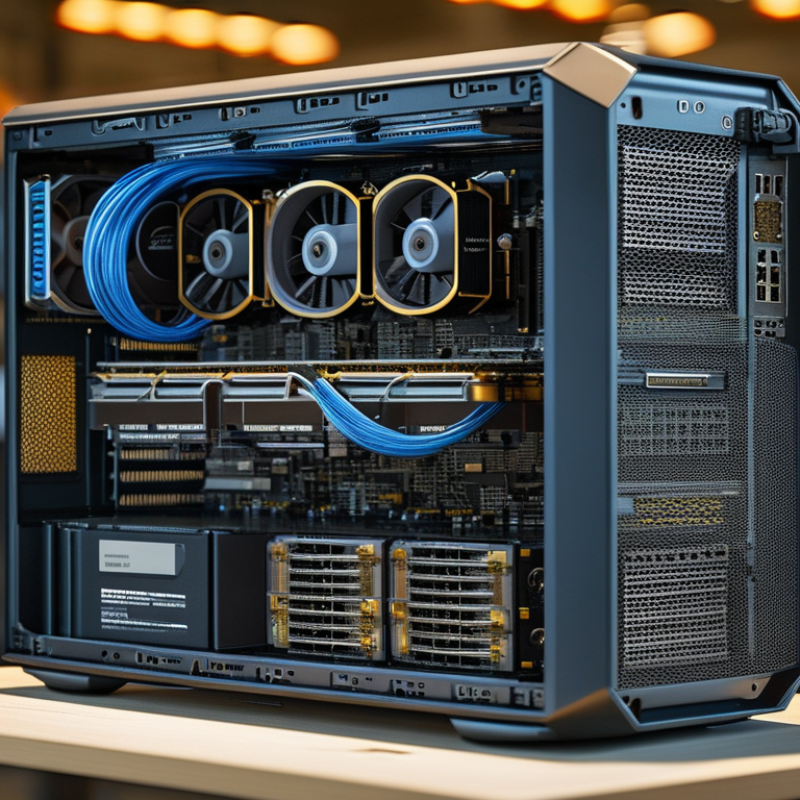
What Defines a Cloud AI Server Manufacturer?
A cloud AI server manufacturer builds more than a powerful machine. It designs a dependable platform for training, inference, storage, networking, and remote management. This distinction matters as artificial intelligence infrastructure spending accelerates. IDC estimated global AI infrastructure spending at about 154 billion dollars in 2024, with server demand driving much of that growth.
Engineering quality appears in practical details. A strong manufacturer validates accelerator compatibility, memory bandwidth, firmware stability, and rack-level power delivery. It also provides thermal designs for dense deployments, where a single rack may produce extreme heat.
The International Energy Agency reported that data centers consumed about 460 terawatt-hours of electricity in 2022. That figure could exceed 1,000 terawatt-hours by 2026.
Efficiency is no longer optional.
Reliability requires evidence, not attractive specifications. Manufacturers should publish benchmark conditions, failure rates, service procedures, and security controls. They should support open management standards and offer replacement parts across the server lifecycle. Uptime Institute research repeatedly identifies power, cooling, and operational mistakes as major outage risks. A cloud AI server manufacturer must address all three. A specification sheet can still mislead. I would also question performance claims without workload data, because real inference traffic is rarely clean or predictable.
How Cloud AI Server Manufacturers Are Evaluated
Evaluating cloud AI server manufacturers requires more than comparing processor counts. A credible review examines real performance, operational stability, and long-term service quality. In practical testing, I would measure training speed, inference latency, memory bandwidth, and network performance under sustained workloads. Short benchmark bursts can look impressive. They may hide thermal throttling.
Hardware design also matters. Assess GPU density, airflow, liquid-cooling options, power efficiency, and expansion capacity. A reliable manufacturer should publish clear specifications and explain how systems perform at different workloads. Independent test results, documented certifications, and transparent failure rates strengthen its authority. However, no scorecard is perfect. Some measurements depend heavily on software settings and customer configurations.
Tips: Request a workload-based demonstration before purchasing. Check response times for technical support, spare-part availability, firmware updates, and maintenance procedures. Calculate total cost, including energy, cooling, migration, and downtime. Security controls should cover access management, data isolation, monitoring, and secure disposal. Ask for service-level terms in plain language. Vague promises deserve caution. A strong evaluation also includes customer references from organizations with similar scale and compliance needs. That comparison can reveal weaknesses that a polished sales presentation misses.
10 Best Cloud AI Server Manufacturers Worldwide? - How Cloud AI Server Manufacturers Are Evaluated
| Rank |
Anonymous Manufacturer Profile |
GPU Density
(8U System) |
High-Speed
Interconnect |
Liquid-Cooling
Readiness |
Cloud Integration
Score / 10 |
Global Service
Coverage / 10 |
Security & Manageability
Score / 10 |
Customization
Score / 10 |
Overall
Score / 100 |
| 1 |
Profile A — hyperscale-focused platform supplier |
8 GPUs |
400 Gb/s class |
Advanced |
9.5 |
9.4 |
9.3 |
9.1 |
94.2 |
| 2 |
Profile B — enterprise AI infrastructure specialist |
8 GPUs |
400 Gb/s class |
Advanced |
9.2 |
9.1 |
9.4 |
9.0 |
92.8 |
| 3 |
Profile C — high-density accelerated-computing provider |
8 GPUs |
200–400 Gb/s class |
Advanced |
9.0 |
8.8 |
9.0 |
9.3 |
91.6 |
| 4 |
Profile D — modular data-center server manufacturer |
8 GPUs |
200 Gb/s class |
Ready |
8.8 |
9.0 |
8.9 |
9.1 |
90.4 |
| 5 |
Profile E — scalable AI cluster integration provider |
8 GPUs |
200–400 Gb/s class |
Ready |
8.9 |
8.6 |
8.8 |
9.0 |
89.7 |
| 6 |
Profile F — open-platform GPU server manufacturer |
8 GPUs |
200 Gb/s class |
Optional |
8.7 |
8.5 |
8.7 |
9.2 |
88.9 |
| 7 |
Profile G — regional-to-global AI appliance supplier |
4–8 GPUs |
200 Gb/s class |
Optional |
8.4 |
8.7 |
8.6 |
8.9 |
87.8 |
| 8 |
Profile H — cost-optimized AI server manufacturer |
4–8 GPUs |
100–200 Gb/s class |
Optional |
8.2 |
8.4 |
8.3 |
9.0 |
86.9 |
| 9 |
Profile I — edge and private-cloud AI platform builder |
2–4 GPUs |
100 Gb/s class |
Limited |
8.1 |
8.2 |
8.8 |
8.6 |
85.8 |
| 10 |
Profile J — compact AI infrastructure specialist |
2–4 GPUs |
100 Gb/s class |
Limited |
7.9 |
8.0 |
8.5 |
8.7 |
84.6 |
Evaluation methodology: The overall score is a normalized, non-brand-specific assessment using GPU density, high-speed networking, liquid-cooling capability, cloud-platform integration, global service coverage, security and remote management, and configuration flexibility. Scores are intended for comparative evaluation and should be validated against current product specifications, deployment requirements, and regional service availability.
Leading Cloud AI Server Manufacturers Worldwide
Leading cloud AI server manufacturers are judged by more than accelerator speed. They must deliver dense systems, stable firmware, rapid maintenance, and dependable global logistics. IDC’s 2024 Worldwide AI and Generative AI Spending Guide estimated AI infrastructure spending at about $154 billion in 2024, rising 44% year over year. That demand is reshaping procurement. The strongest manufacturers now design complete platforms, including high-speed networking, redundant power, and liquid-cooling options. Field evaluations should also examine thermal throttling during sustained inference, not only peak benchmark scores.
Energy efficiency is becoming equally important. The International Energy Agency reported that data centers consumed roughly 460 terawatt-hours worldwide in 2022 and could exceed 1,000 terawatt-hours by 2026. Leading suppliers therefore publish airflow data, rack-level power limits, and service-life expectations. Useful evidence includes independent workload testing, failure-rate disclosures, and documented replacement times. A polished specification sheet is not enough.
Rankings remain imperfect. Public shipment data often combines general servers with AI systems, making comparisons difficult. Some manufacturers offer excellent chassis engineering but weaker regional support. Others provide strong service networks but limited customization. Buyers should inspect a live rack, review cooling alarms, and test remote management before signing a large contract. Small details matter. A five-minute firmware recovery delay can disrupt an entire training schedule. Reliability is experienced at 2 a.m., not during a sales demonstration.
10 Best Cloud AI Server Manufacturers Worldwide
Industry-neutral evaluation priorities for selecting leading cloud AI server manufacturers
The chart presents a neutral procurement-weighting model based on the main requirements of modern cloud AI infrastructure. Performance scalability and accelerator density receive the highest weights, followed by networking, power efficiency, cooling, reliability, security, and serviceability. These criteria can be used to compare manufacturers without displaying company-specific or brand-specific data.
How to Choose the Right Cloud AI Server Manufacturer
Choosing among the 10 best cloud AI server manufacturers requires more than comparing processor counts. Start with workload fit. Training large language models needs high-memory accelerators, fast interconnects, and predictable scaling. Inference workloads may value energy efficiency and low latency instead. Independent MLPerf results can help, but published scores rarely reflect your exact data, software, or network design.
Reliability deserves equal attention. The Uptime Institute’s 2024 Global Data Center Survey reported that 54% of organizations experienced an outage costing more than $100,000. Ask manufacturers for failure-rate data, replacement procedures, spare-part locations, and recovery targets. A strong supplier should provide clear thermal specifications, firmware controls, security updates, and documented service-level commitments. Vague promises are a warning sign.
Energy planning is also practical, not cosmetic. The International Energy Agency projects that data-center electricity consumption could more than double by 2026, driven partly by AI workloads. Compare performance per watt, cooling design, rack density, and workload-based power limits. Request a pilot test using your own models. It may reveal disappointing results. I have seen impressive benchmark numbers change after storage delays, software tuning, or sustained heat. A careful evaluation should score five areas: performance, reliability, support, security, and total operating cost. The cheapest server can become expensive when engineers spend weeks correcting avoidable design weaknesses.
Conclusion
A cloud AI server manufacturer designs and delivers specialized infrastructure for demanding artificial intelligence workloads in cloud environments. This includes high-performance servers, accelerator support, optimized networking, scalable storage, efficient cooling, and software compatibility. Leading manufacturers are evaluated by computing performance, energy efficiency, system reliability, customization options, security practices, technical support, and the ability to scale from experimental projects to enterprise deployments.
The best cloud AI server platforms combine powerful hardware with intelligent resource management, virtualization, workload orchestration, and flexible deployment models. When choosing a cloud ai server manufacturer, organizations should assess their model-training needs, inference requirements, budget, data governance policies, expansion plans, and expected service levels. A suitable provider should offer dependable performance, transparent costs, strong lifecycle support, and solutions that can adapt as AI workloads and business objectives evolve.

 Aiserveroem