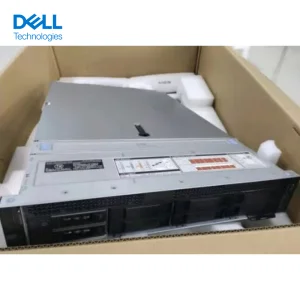
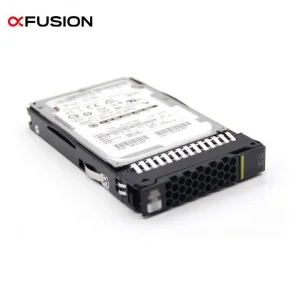
Explore our foundational security servers, accelerators, and high-performance system configurations designed for resilient cloud environments.
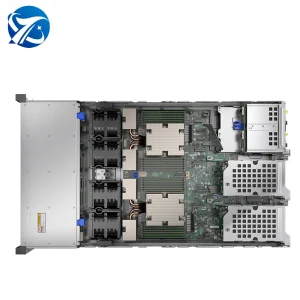
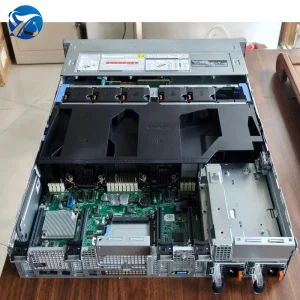

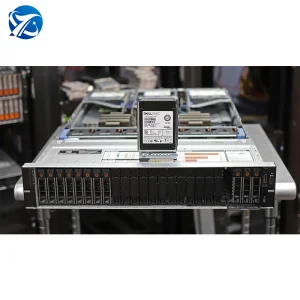
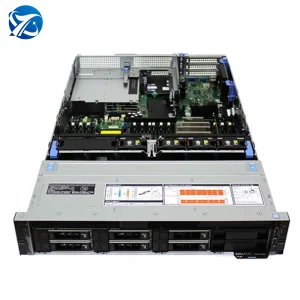
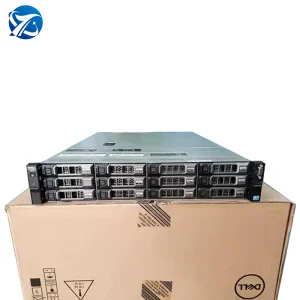
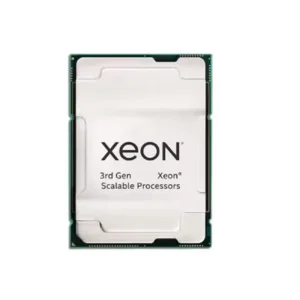
Whitepaper Section 1: The intersection of zero-trust network architectures and cryptographic server integrity.
As enterprise operations migrate toward decentralized hybrid clouds and massive artificial intelligence model pipelines, software-based firewalls and endpoint detection tools are no longer sufficient. Sophisticated adversaries now execute firmware-level persistent threats, BIOS injection operations, and side-channel memory snooping attacks. To combat this evolving threat landscape, global organizations are shifting to Hardware Root of Trust (RoT) infrastructures.
AI Server Technology Co., Ltd. addresses this paradigm by manufacturing server solutions equipped with automated platform firmware resilience, hardware enclaves (Intel SGX, AMD SEV-SNP), and secure PCIe switches. By utilizing cryptographic signatures embedded directly on host systems, we ensure that every system boot process is validated from the first byte of microcode to the running virtual machines. This comprehensive methodology mitigates unauthorized firmware modifications and secures high-performance computing (HPC) nodes against zero-day exploits.
Encrypt deep learning datasets while actively resident in physical memory, shielding sensitive intellectual property and corporate parameters from host-level interception.
Employ cryptographic encryption at the bus interface level, neutralizing bus-interception vectors and assuring telemetry integrity across external acceleration platforms.
Integrate out-of-band monitoring architectures that continuously audit UEFI, BIOS, and BMC states, executing instant recovery protocols upon detecting anomaly patterns.
Whitepaper Section 2: How hardened server systems protect operations across specialized industries globally.
Government infrastructure deployments demand localized isolation barriers to comply with native sovereignty mandates. Our custom motherboard designs offer physical separation lanes, air-gapped security configurations, and offline firmware update mechanisms that isolate compute clusters from external threat networks.
Low-latency trade platforms utilize PCIe switch networks to fast-track algorithmic transactions. Our hardware integrates secure Retimer Boards and custom motherboards that enforce point-to-point bus validation, preventing lateral compromise vectors and data sniffing at the physical network edge.
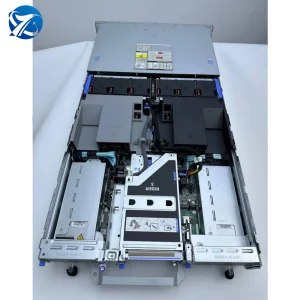
Smart energy grids process utility data across thousands of edge collection nodes. By deploying 1U and 2U rack servers equipped with TPM 2.0 microcontrollers, utilities create tamper-evident hardware nodes that maintain consistent, encrypted tunnels to dispatch headquarters, preventing unauthorized grid adjustments.
Medical data processing facilities leverage scalable storage pipelines to train imaging diagnostics algorithms. Our systems provide hardware-enforced memory paging controls, ensuring patient data integrity stays clean of system root-level intrusion or administrative overreach.
Whitepaper Section 3: Anticipating future paradigms in quantum-resistant hardware and autonomous telemetry.
Deploying advanced system telemetry sensors that monitor chassis temperature anomalies, dynamic voltage ripples, and internal bus latency offsets to proactively isolate compromised hardware elements.
Introducing hardware architectures with field-programmable secure cryptoprocessors capable of executing lattice-based cryptographic algorithms. This ensures system boot validations remain secure against future decryption tools.
Refining high-speed PCIe switches and GPU board architectures to allow hard partitioning of memory and data paths. This limits information leakage even in multi-tenant environments.
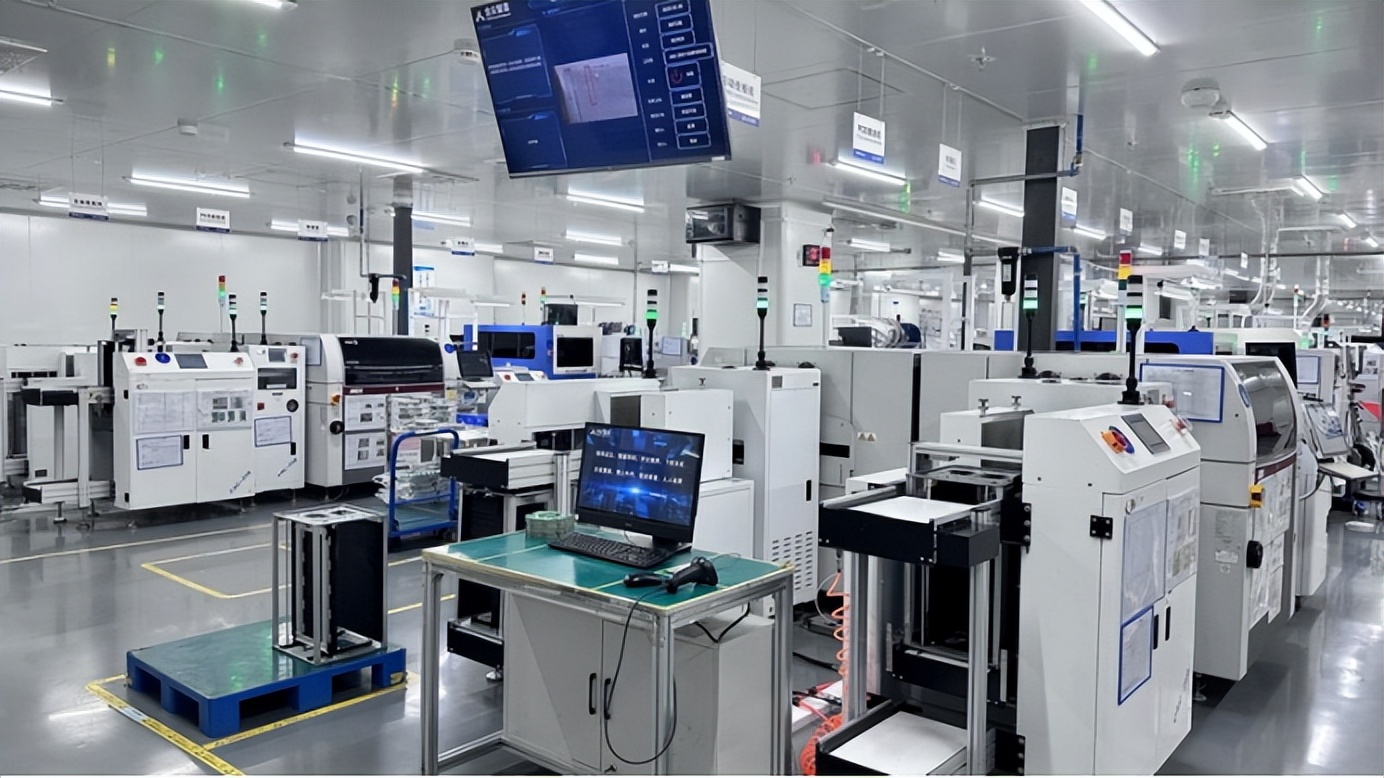
The manufacturing infrastructure of AI Server Technology Co., Ltd. provides global enterprises with a robust supply chain, offering highly specialized capabilities and adaptability. Located in China's technology production corridor, our facilities streamline server development from board design to system integration under strict quality control protocols.
By keeping design, component sourcing, motherboard assembly, and system validation within a unified ecosystem, we help partners mitigate international delivery disruptions and manage high-mix manufacturing requirements efficiently.
Whitepaper Section 4: Navigating data compliance standards across major international markets.
Deploying high-performance compute nodes globally requires adherence to local security regulations. Organizations must navigate strict data residency and access policies, making hardware-level compliance crucial. Our systems are built to meet international data protection and privacy standards, simplifying deployment across jurisdictions.
Whether addressing the European Union's NIS 2 directives, healthcare HIPAA regulations in the Americas, or regional security assessments, our servers adapt to complex environments. We support open-source Baseboard Management Controller (BMC) options, such as OpenBMC, allowing enterprises to inspect and verify their monitoring codebase independently to verify transparency.

Your Trusted Global Manufacturer of Secure Compute Infrastructure.
AI Server Technology Co., Ltd. is a manufacturer and solution provider specializing in AI computing infrastructure. We focus on the design, development, and production of high-performance servers, PCIe switches, GPU baseboards, motherboard solutions, and retimer boards.
Our products are used in AI training, machine learning, high-performance computing (HPC), cloud data centers, and enterprise-level computing environments. With R&D capabilities and flexible OEM/ODM services, we deliver reliable, scalable, and high-efficiency AI server solutions for global customers.
By combining high-speed physical board routing with robust system engineering, we help clients build reliable infrastructures. From development to final validation, our processes are designed to deliver systems prepared for demanding computing environments.
Direct responses regarding hardware integrations, cryptographic verification, and export logistics.
Our systems utilize a dedicated hardware microcontroller that runs independent, cryptographically signed verification firmware. During startup, this controller measures the BIOS/UEFI firmware image against pre-provisioned signatures stored in write-protected hardware memory. If a discrepancy or alteration is detected, the boot sequence halts automatically, and the system can roll back to a verified backup recovery image.
Yes, our PCIe switch systems and retimer boards are engineered to support physical partition mapping and secure virtual machine routing. By enforcing distinct memory spacing and configuring the switch tables to isolate physical links, we prevent data leakage between adjacent card slots, providing secure isolation in shared cloud hosting setups.
Yes. Through our OEM/ODM design services, we can configure system motherboards to support OpenBMC implementations. This enables client security teams to review, compile, and deploy their own baseboard management firmware, removing dependency on closed-source third-party binaries.
We source integrated circuits and critical silicon elements directly from certified chip makers. Every manufacturing batch undergoes component validation and trace testing on-site. For clients with high-security needs, we can pre-provision secure device keys during assembly, ensuring that only verified hardware components can communicate across the system motherboard.
Our server configurations are tested to meet global standard certifications, including CE, FCC, RoHS, and safety markings. This verification process ensures compatibility and safety requirements are satisfied before hardware is shipped for international deployment.
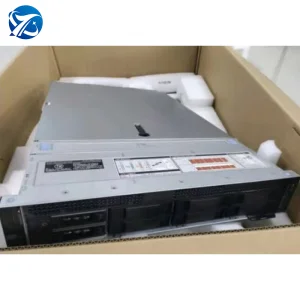
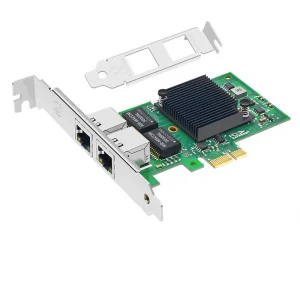
Select performance upgrades, solid-state drives, high-density computing chassis, and interface cards to scale secure compute arrays.


 Aiserveroem