High-concurrency voice switching, DeepSeek LLM real-time speech analysis, and enterprise VoIP SIP session hardware infrastructure.
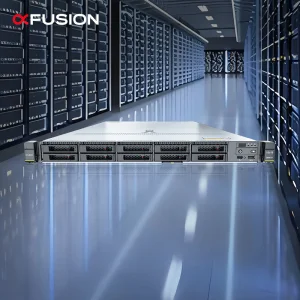
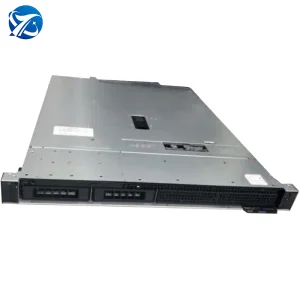


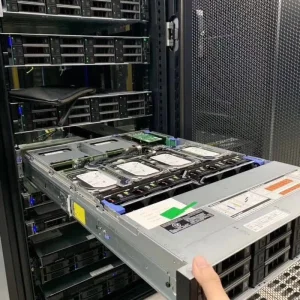
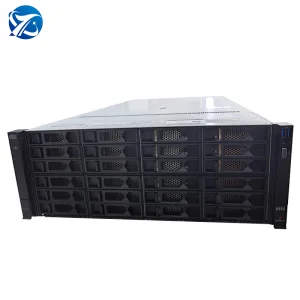
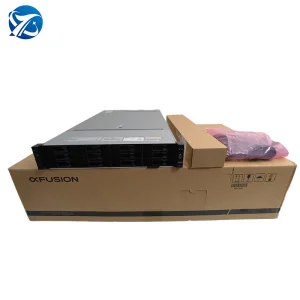
Modern enterprise VoIP is no longer just about voice transmission; it relies heavily on ultra-low latency, high-density server hardware, PCIe retimer stability, and hardware-accelerated AI NLP models.
Understanding the convergence of telecom gateways, SIP server clusters, and AI-driven deep learning hardware.
The global Voice over IP (VoIP) landscape is undergoing its most radical transformation since the transition from TDM (Time-Division Multiplexing) to SIP (Session Initiation Protocol). In 2025, enterprise VoIP demands go far beyond voice transmission—they encompass real-time sentiment analysis, active deep-learning noise suppression, real-time multilingual AI voice translation (e.g., DeepSeek/LLM integration), and instant WebRTC streaming.
Consequently, the performance bottleneck has shifted from simple network bandwidth to back-end server processing capability, media transcoding density, and PCIe bus throughput within call centers and telecom cloud data centers.
Achieving zero-jitter voice streams and crystal-clear sound requires sophisticated hardware foundations. Leading global VoIP manufacturers no longer build standalone voice boxes; they rely on advanced high-density GPU servers, specialized PCIe retimer boards, and ultra-fast storage nodes to process millions of concurrent RTP (Real-time Transport Protocol) packets per minute without dropouts or latency degradation.
Comprehensive evaluation based on enterprise market share, hardware OEM/ODM capabilities, media processing density, and AI integration readiness.
Specializing in custom high-density server hardware, PCIe switches, GPU baseboards, and retimer boards optimized for large-scale enterprise VoIP switching, WebRTC gateways, and DeepSeek AI voice bot cluster processing.
A cornerstone of Fortune 500 unified communications. Offers end-to-end Cisco Unified Communications Manager (CUCM), enterprise IP phones, and robust edge routers with integrated voice gateways (ISRG2).
Renowned for mission-critical enterprise call center solutions (Avaya Aura Platform). Combines hybrid cloud voice infrastructure with specialized call center hardware and agent desktop integration.
A global power in SIP hardware production, manufacturing desktop IP phones, conference systems, and video collaboration endpoints compatible with Zoom, Microsoft Teams, and open-source PBX.
Provides complete open-standard SIP communication hardware including UCM IP PBX appliances, FXS/FXO VoIP gateways, and enterprise HD IP phones tailored for agile business environments.
Focuses on private and hybrid cloud business communications. Mitel's hardware controllers and call control software cater extensively to healthcare, hospitality, and public sector verticals.
Industry benchmark for acoustic excellence. Produces premium executive IP conference phones, noise-canceling headsets, and Microsoft Teams Rooms (MTR) hardware kits.
Primary sponsor of Asterisk and FreePBX. Sangoma designs telephony interface cards (E1/T1, analog), session border controllers (SBCs), and turn-key IP PBX appliances.
Delivers ultra-large-scale carrier voice infrastructure, enterprise Session Border Controllers (eSpace series), and AI-enhanced cloud video conferencing solutions globally.
Formed via Sonus and Genband merger. Supplies carrier-grade Session Border Controllers (SBC 5000/7000 series), voice security appliances, and network transformation switches.
A detailed comparison highlighting hardware customization, compute offloading, and AI integration capability across leading enterprise solutions.
| Manufacturer / Supplier | Target Ecosystem | Hardware Customization (OEM/ODM) | AI Real-Time Audio Offload | PCIe Bandwidth & Retimer Support |
|---|---|---|---|---|
| AI Server Technology Co. | Hyperscale Call Centers & Telecom AI | Full Custom OEM/ODM | Dedicated GPU Baseboard Offloading | PCIe 5.0 / Gen6 Retimer Board Supported |
| Cisco Systems | Global Fortune 500 Enterprise UC | Standard Hardware Models | Cloud-Based Webex AI | Proprietary Router/Blade Architecture |
| Yealink | SIP Endpoints & Desktop Hardware | White-label Branding Available | On-chip DSP Noise Reduction | Standard Terminal Microcontrollers |
| Grandstream | SMB & Mid-Market Appliance | Fixed Appliance SKU Set | Basic DSP Audio Filters | Embedded SoC Architecture |
| Sangoma | Open-Source / Asterisk Ecosystem | PCI Telephony Expansion Cards | Host CPU Processing | Standard PCIe 3.0 Telephony Interface |
Why international enterprise procurement directors and system integrators choose China for next-generation telecommunication hardware assembly and ODM manufacturing.
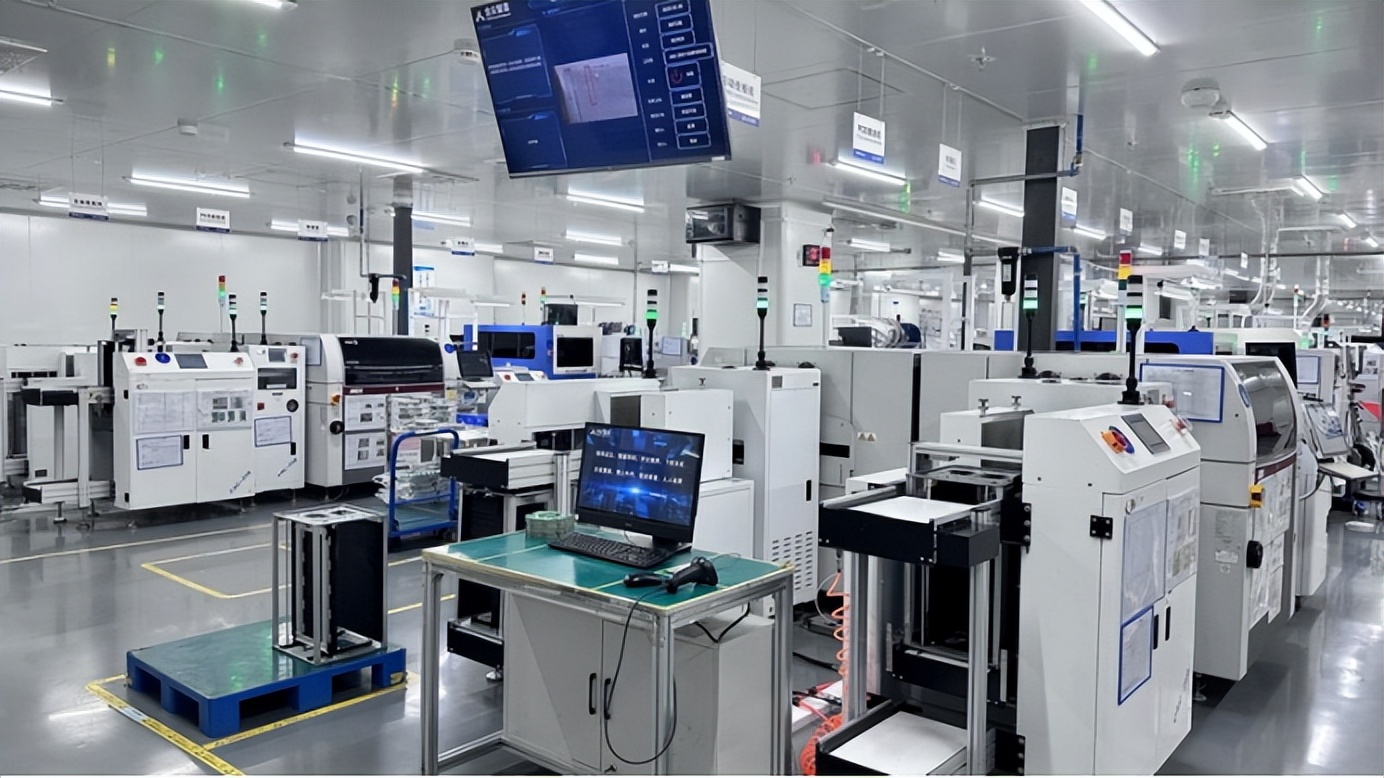
From component-level SMT PCB placement, PCIe retimer layout design, aluminum chassis stamping to custom BIOS tweaking—China’s technology hubs (like Shenzhen & Dongguan) offer unprecedented supply chain speed, reducing prototyping cycles from months to days.
Modern VoIP infrastructure requires specialized high-density rack computing. Chinese OEMs excel at producing high-thermal-efficiency 1U and 2U rack servers equipped with PCIe switches, multi-socket Intel/AMD platforms, and GPU baseboards specifically tuned for massive SIP call concurrency.
By optimizing raw hardware procurement, bill of materials (BOM), and modular assembly, Chinese manufacturers provide up to 35-50% TCO savings on enterprise server hardware compared to traditional North American or European hardware vendors.
How emerging technological waves are altering hardware requirements for telecom service providers and enterprise call centers.
Integrating DeepSeek, Whisper, and custom LLMs directly into the RTP media stream requires ultra-fast local GPU inference servers. Hardware setups now demand server motherboards with high PCIe bandwidth to minimize audio-to-text-to-audio latency below 300 milliseconds.
WebRTC has shifted VoIP from dedicated desktop phones to browser-based unified communications. Processing WebRTC’s heavy DTLS-SRTP encryption demands dedicated hardware encryption engines and high-core-count multi-socket rack servers.
As media gateways scale up to 100,000 concurrent call channels, signal loss across long server motherboard traces becomes a bottleneck. Utilizing high-performance PCIe retimer boards ensures signal integrity across NVMe storage, network cards, and GPU accelerators.
Eavesdropping and SIP fraud protection are moving to the physical layer. Next-gen Session Border Controllers (SBCs) incorporate hardware Root of Trust (RoT), secure boot protocols, and TPU-assisted deep packet inspection (DPI) to block DDoS attacks instantly.
VoIP is extending to 5G core networks (VoNR). Enterprise server hardware must now simultaneously bridge standard SIP trunks, legacy analog FXO ports, and private 5G SIM/eSIM gateways within unified enterprise hyperconverged systems.
With data center energy costs escalating, high-efficiency redundant PSUs (80 Plus Titanium) and intelligent thermal throttling in server cases (like 1U/2U server chassis) are paramount to lowering operational expenses for massive 24/7 call center infrastructure.
AI Server Technology Co., Ltd. is a professional manufacturer and solution provider specializing in AI computing infrastructure and high-performance telecom server hardware.
We focus on the design, engineering development, and mass production of high-density rack servers, PCIe switches, GPU baseboards, server motherboard solutions, and retimer boards engineered for demanding real-time voice processing and AI inference environments.

Tailored server architecture configurations for distinct high-volume communication environments.
Requires ultra-low latency turrets and SIP recording servers. Utilizing PCIe retimer boards and high-frequency dedicated Intel/AMD processors guarantees zero-packet-drop voice recording and instant line switching for high-frequency trading floors.
Processing tens of thousands of simultaneous calls with automated real-time voice translation and compliance auditing. Demands multi-GPU servers (such as 2U 4-GPU or 4U 8-GPU systems) paired with NVMe storage arrays for high-throughput speech-to-text indexing.
Telecom operators and Tier-1 ITSPs require carrier-grade Session Border Controller nodes. Hyperconverged server infrastructure providing dual-redundant hot-swappable power supplies and dual 100GbE optical SFP ports guarantees uninterrupted public-switched telephone network (PSTN) connectivity.
Key evaluation factors for CTOs, IT Infrastructure Managers, and Strategic Procurement Officers.
Calculate the exact number of concurrent G.711 to G.729 / Opus transcode channels needed. Ensure the supplier's server motherboard supports dedicated PCIe acceleration cards or high-core CPUs to prevent audio distortion during peak call volumes.
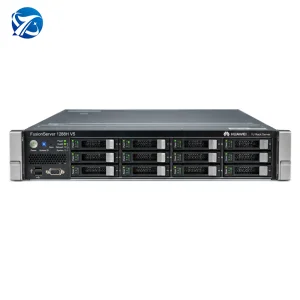
Evaluate rack space efficiency. For data center colocation, 1U 2-socket servers like the 1288H series maximize channel density per U space while managing airflow dynamics through intelligent thermal fan control modules.
Verify whether high-density storage or GPU expansion cards degrade PCIe bandwidth. Modern workloads require servers built with PCIe switch systems and retimer boards to guarantee full PCIe Gen 5 speeds across all connected expansion slots.
Off-the-shelf brand servers often carry restrictive hardware locks and inflated warranty costs. Partnering directly with specialized server OEMs (such as AI Server Technology Co., Ltd.) allows custom branding, tailored BIOS configs, and cost-effective component sourcing.
Expert technical answers addressing common inquiries from system integrators, network engineers, and telecom buyers.
While traditional VoIP only required basic CPU cycles for SIP signaling, modern AI-driven VoIP applications rely on GPU servers to perform real-time natural language processing (NLP), automatic speech recognition (ASR), background noise suppression via deep learning models, and instant agent co-pilot suggestions during live phone calls.
PCIe Retimer boards regenerate and re-clock high-speed signals across the motherboard. In 1U or 2U high-density rack servers housing multiple network interface cards, NVMe SSDs, and GPU cards, retimer boards eliminate signal jitter, high-frequency signal degradation, and packet transmission errors, ensuring uninterrupted real-time audio streams (RTP).
Custom OEM/ODM manufacturing enables software vendors and telecom service providers to deliver turnkey appliances tailored to their exact software specs. It lowers unit costs, permits custom chassis branding, enables specific I/O port configurations (e.g., dual 10GbE SFP+ plus dedicated management ports), and eliminates unnecessary consumer-grade components.
For handling 50,000+ concurrent SIP channels with transcoding, we recommend a 2U dual-socket server platform (such as Intel Xeon Scalable 4th/5th Gen or AMD EPYC), equipped with at least 128GB ECC RAM, dual redudant 1500W Platinum PSUs, hardware RAID NVMe arrays for fast call-logging write-speed, and PCIe Switch subsystems supporting high-speed 25GbE/100GbE NICs.
Enterprise procurement teams should partner with established manufacturers holding ISO9001 and CE/FCC certifications, inspect factory SMT lines, evaluate component traceability (e.g., tier-1 DRAM and PCB substrates), and request burn-in stress testing (72-hour full-load thermal chamber tests) prior to mass shipment.
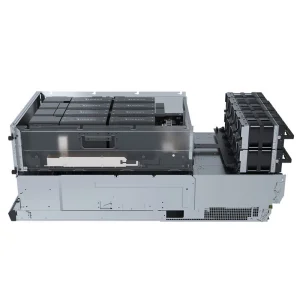
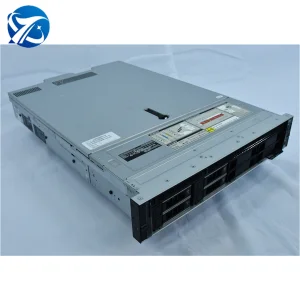
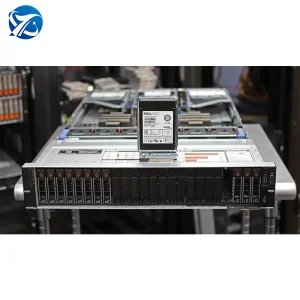
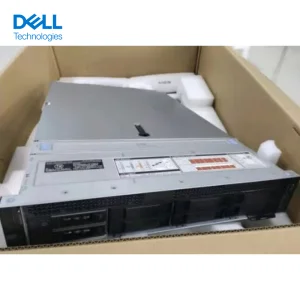
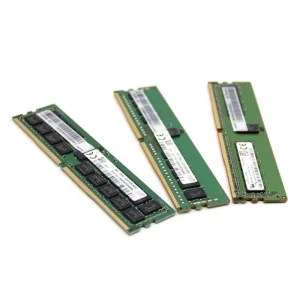
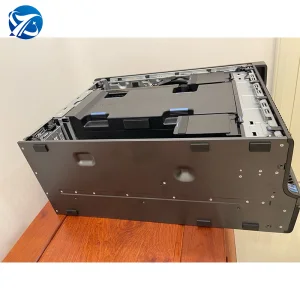
Explore our full line of rack-mount servers, high-density storage chassis, and server memory modules built for telecom backbones.

 Aiserveroem