Explore elite-grade computational and optical carrier servers designed for large-scale Software Defined Networking (SDN) deployments and modern virtualized environments.
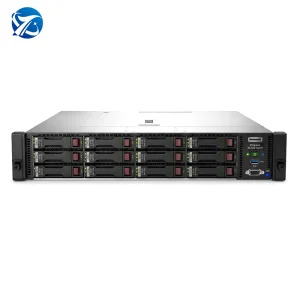
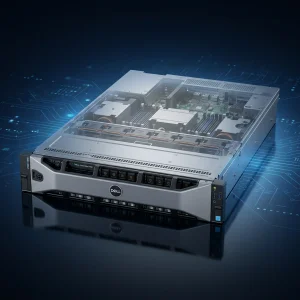
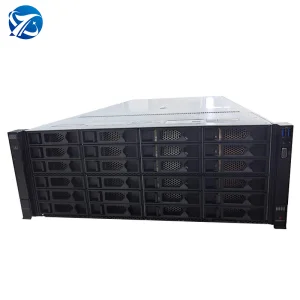

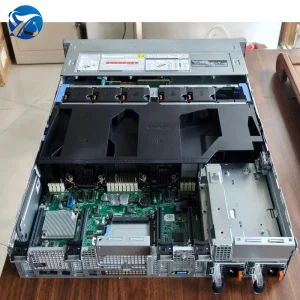
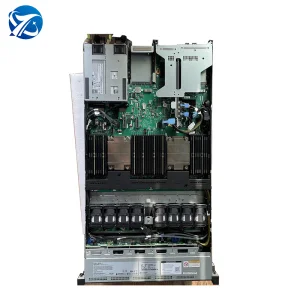

The global data infrastructure ecosystem is undergoing a generational shift. Software Defined Networking (SDN) has decoupled the control plane from the data plane, rendering monolithic networking legacy hardware obsolete. Modern hyper-scale enterprise deployments demand open-source network operating systems (NOS), programmable silicon (like P4-native chips), and high-performance bare-metal or white-box servers.
By shifting dynamic routing paths, load balancing, and network fabric configuration to unified, centralized software, enterprises achieve unparalleled operational flexibility. In typical high-performance computing (HPC) environments, SDN configurations powered by specialized PCIe switch fabrics and GPU servers reduce latency overhead by up to 40% compared to legacy architectures.
As a leading hardware supplier, AI Server Technology Co., Ltd. plays a vital role by manufacturing the ultra-reliable hardware, GPU nodes, and PCIe switches required to host these virtualized control systems.
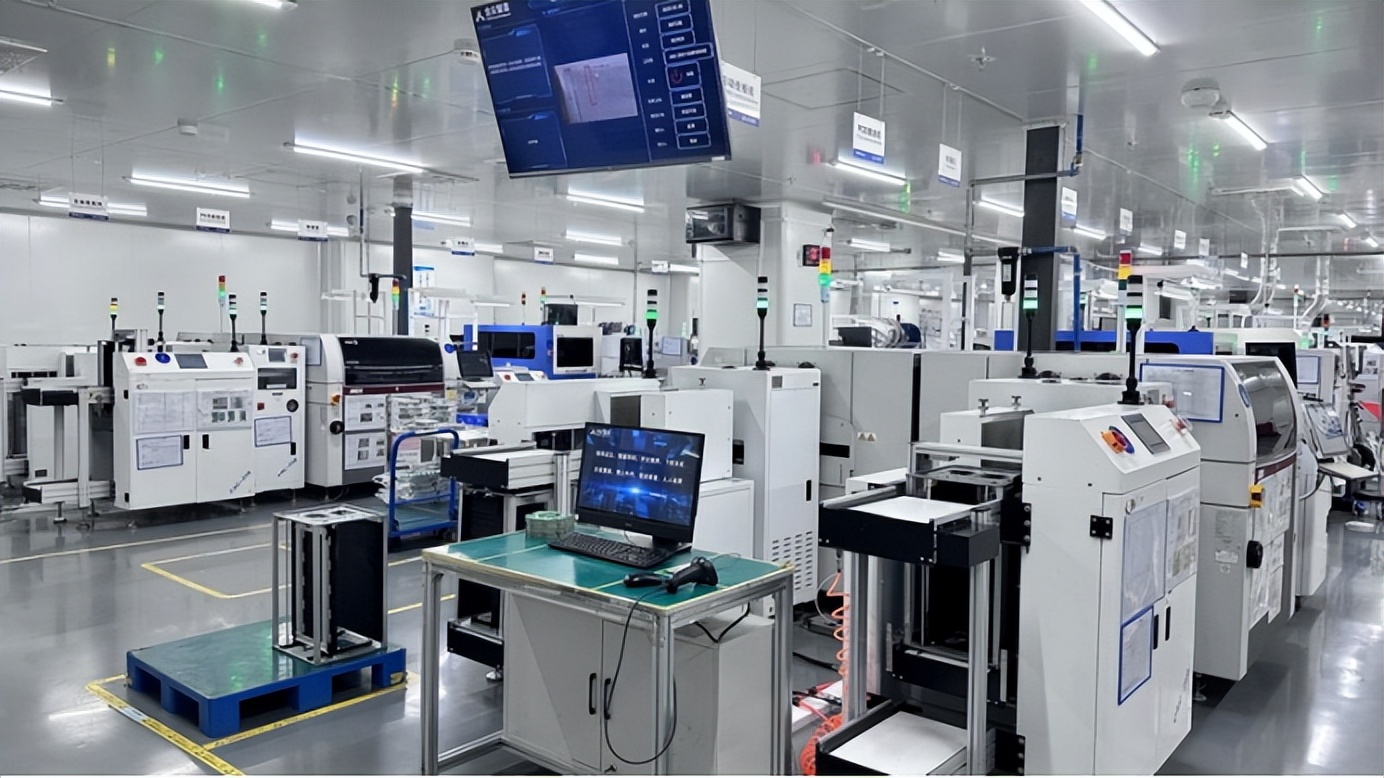
A comprehensive assessment of the manufacturers and OEM factories driving the software-defined networking revolution globally, offering bare-metal infrastructure, whitebox routing, and software control layers.
Renowned for its Application Centric Infrastructure (ACI), Cisco provides enterprise-level SDN solutions integrating advanced hardware with telemetry systems. Their switches power global mission-critical data networks.
A pioneer in software-driven cloud networking solutions, Arista’s EOS (Extensible Operating System) leverages open-standard programming models, making it the choice for massive cloud databases and AI infrastructure.
Specializing as an OEM/ODM manufacturer for AI and SDN physical-layer components, offering PCIe Switch systems, GPU server baseboards, and Retimer modules necessary for heavy-payload data center processing.
A dominant factory specializing in open network hardware. They design bare-metal whitebox switches pre-loaded with ONIE (Open Network Install Environment) supporting various open-source NOS distributions.
Utilizing Contrail Enterprise Multicloud and Mist AI engine interfaces, Juniper specializes in orchestrating policy-based security and automation across diverse multi-vendor virtualization environments.
HPE delivers versatile physical server architecture and Aruba CX switching, facilitating comprehensive Software Defined Branch (SD-Branch) and hyper-converged edge virtualization platforms.
Broadcom acts as the critical chip foundry for the SDN world. Their Trident and Tomahawk ASIC product lines power nearly 80% of whitebox networking hardware manufactured across factories globally.
Dell's Open Networking initiative enables cloud operators to choose third-party network operating systems, running on Dell’s reliable and enterprise-supported hardware ecosystems.
Pioneering the network virtualization overlay sector with VMware NSX, offering completely software-defined routing, micro-segmentation, and security services independent of underlying physical topologies.
Providing end-to-end hardware fabrics under the CloudFabric brand, Huawei integrates deep hardware optimization with SDN controllers to serve telecommunication networks and enterprise clouds.

AI Server Technology Co., Ltd. is a professional manufacturer and solution provider specializing in AI computing infrastructure. We focus on the design, development, and production of high-performance servers, PCIe switches, GPU baseboards, motherboard solutions, and retimer boards.
Our products are widely used in AI training, machine learning, high-performance computing (HPC), cloud data centers, and enterprise-level computing environments. With strong R&D capabilities and flexible OEM/ODM services, we are committed to delivering reliable, scalable, and high-efficiency AI server solutions for global customers.
Application Areas: Artificial Intelligence, Deep Learning, HPC, Cloud Computing, Data Centers
Analyzing industry transitions, performance paradigms, and future horizons where software-defined infrastructure integrates directly with artificial intelligence computing.
Software Defined Networking has evolved past simple virtual LANs. With hyper-scale networks processing zettabytes of information daily, traditional hardware-bound configurations create physical bottlenecks. Modern factories are building systems compatible with SDN protocols to ensure automated traffic redirection based on real-time application requirements.
Additionally, SD-WAN (Software-Defined Wide Area Networking) and SD-LAN have become crucial. By abstracting network control, multi-site corporations can deploy virtual private connections using public internet lanes, retaining enterprise-grade security via unified orchestrators. This mitigates dependency on costly private MPLS circuits.
The industry's technical roadmap points directly to programmable network fabrics. In the past, switch behaviors were determined solely by fixed ASICs (Application-Specific Integrated Circuits). P4 programming language allows operators to write logic specifying how packets are parsed and modified on the switch itself. This level of control enables sub-microsecond latency routing—vital for real-time financial trading, high-density AI clusters, and remote automation.
Hardware factories transition to standard x86 and ARM server architectures with standard PCIe configurations. Shift to open systems such as SONiC and ONIE.
Deployment of PCIe Gen 5 and Gen 6 interfaces across switch nodes. Mass adoption of GPU direct memory access (RDMA over Converged Ethernet - RoCE) to optimize node-to-node communication.
Centralized controllers implement machine learning to predict traffic congestion, automatically re-routing pipelines before data packets drop.
Within deep learning frameworks, the bottleneck is rarely compute power alone; it is network transit latency and GPU inter-communication pathways. Implementing SDN strategies at the server motherboard level changes the equation.
By using PCIe Switch Systems, GPU Baseboards, and high-performance Retimer Boards, server chassis can dynamically partition resources depending on workload requirements. If a workload requires direct peer-to-peer data transfers between eight GPUs, the PCIe switches can configure routing logic locally, eliminating the need to query the host CPU. This capability represents the physical implementation of software-defined resources within the server chassis.
Here is how SDN infrastructures and robust OEM hardware deploy in real-world environments:
1. Telecommunications 5G Edge CloudsDeploying bare-metal, low-depth servers at base stations running Open Network Operating Systems allows carriers to configure network slices. This grants deterministic bandwidth to emergency services while routing consumer traffic through lower-priority queues.
2. Industry 4.0 Smart FactoriesRobotic manufacturing lines require sub-millisecond response loops. By utilizing SDN-enabled networks, factories prioritize motion control traffic over surveillance stream workloads, ensuring stable operations.
3. Hyperscale Financial CloudsHigh-frequency trading networks rely on micro-segmentation to isolate trading channels. Real-time SDN routing prevents security breaches and isolates failures dynamically without manual intervention.
Integrate robust compute frameworks to balance workloads, process algorithms at the edge, and store structured data securely.
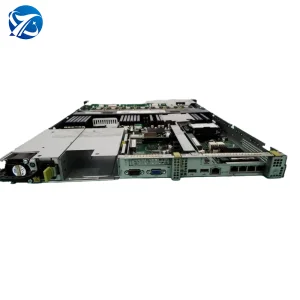
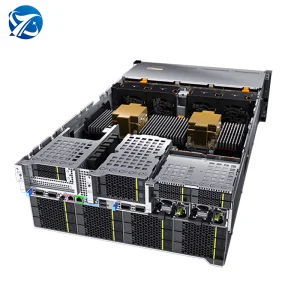

Expert answers to critical industry questions regarding Software Defined Networking architecture, physical hardware sourcing, and compatibility standards.
Traditional networking relies on hardware switches where both the data forwarding (data plane) and decision-making (control plane) are housed in the same device. SDN decouples these elements. A centralized software controller makes all routing decisions, instructing basic whitebox switches dynamically. This eliminates manual configuration on each device.
Bare-metal and whitebox switches are generic, high-performance switches sold without proprietary operating systems. They allow operators to install third-party Network Operating Systems (such as SONiC or Cumulus Linux). This eliminates vendor lock-in, reduces capital expenditures, and simplifies infrastructure scaling.
As networks move toward high-speed compute clusters (like AI training nodes), SDN principles are applied within the server chassis. High-performance PCIe switches route data between GPUs and storage nodes dynamically. Retimer boards amplify these high-frequency signals, ensuring signal integrity. This configuration constitutes the physical layer supporting SDN-like reconfigurable topologies inside servers.
SONiC (Software for Open Networking in the Cloud) is an open-source Linux-based network operating system developed by Microsoft. It runs on switches from multiple hardware manufacturers. SONiC allows data centers to write modular services, simplifying the management of large-scale switch fabrics.
High-density computing nodes generate significant thermal loads. Integrating liquid cooling direct-to-chip (as seen in modern HPE DL360 Gen12 configurations) maintains optimal operating temperatures, preventing thermal throttling. This ensures stable performance for SDN controllers handling routing tables in massive data centers.
Yes. Using hybrid controller overlays, legacy systems can communicate with SDN fabrics. However, legacy systems cannot be managed dynamically at the individual port level by the SDN controller. They must be grouped or treated as static endpoints.
 Aiserveroem