Aiserveroem

Japan's Telecommunication Architecture: An Era of Optical Hegemony and Low Latency
The transition of the Japanese enterprise ecosystem towards the digitization milestone of **Society 5.0** has placed unprecedented technical stress on underlying network infrastructures. High-performance computing nodes, localized AI data hubs, and critical industrial automation channels require robust switching networks capable of handling massive bandwidth without experiencing architectural fatigue. In Japan, where optical fiber networks have reached near-ubiquitous coverage across metropolitan and rural centers alike, the challenge is no longer about raw reach. It is about minimizing interface latencies, eliminating internal packet drops, and complying with stringent local energy-consumption metrics.
For systems integrators operating in Tokyo, Osaka, and Fukuoka, sourcing qualified network switch components requires finding partners who understand both international standards and localized installation requirements. High-density server environments inside local colocation hubs rely on strict cooling management and electromagnetic compatibility (EMC). Hardware deployed in these locations must demonstrate resilience to heat accumulation and comply with specific safety standards such as the **PSE mark** and **VCCI Class A/B** regulations, making global design adaptability a significant competitive advantage.
Japanese Local Commercial & Industrial Realities
Japan's data center market is experiencing a massive geographic redistribution. Historically concentrated in metropolitan areas like Koto-ku in Tokyo or northern Osaka, providers are expanding outward to Chiba, Kanagawa, and Hyogo prefectures to mitigate seismic risks and secure stable power grids. The Ministry of Economy, Trade and Industry (METI) has established strict targets under the **Green IT initiatives**, encouraging data center builders to achieve a Power Usage Effectiveness (PUE) below 1.4 by 2030. Consequently, network hardware providers must deliver high-speed throughput while minimizing power consumption.
Localized Engineering Note for Tokyo & Kansai Regions
Thermal mitigation at the rack level is vital. Network switches and interconnect hardware must support back-to-front or front-to-back airflow options to integrate seamlessly into modern cold/hot aisle containment systems utilized by leading local providers like NTT Communications, KDDI, and Equinix Japan.
Global Trends: The Convergence of Compute and Switch Fabrics
Globally, the networking domain is moving away from discrete, siloed nodes towards unified fabric systems. With the rise of large-scale artificial intelligence models, distributed machine learning workloads require near-instant communication across thousands of nodes. This trend has replaced traditional multi-hop TCP/IP pipelines with **RDMA over Converged Ethernet (RoCE v2)** and InfiniBand solutions. Physical switches are now designed with deeper packet buffers, dynamic load balancing, and advanced congestion notification algorithms (such as ECN and PFC) to prevent head-of-line blocking during heavy traffic periods.
Simultaneously, the industry is transitioning to **PCIe Gen 5.0** and the early stages of **PCIe Gen 6.0**, which run directly over the host motherboard to connect accelerator cards, storage arrays, and network interface controllers (NICs). Inter-host communication speeds are scaling from 100G and 200G up to 400G and 800G, requiring advanced physical layer transceivers and high-performance PCIe Retimer boards to maintain signal integrity over longer transmission paths.
Localized Application Scenarios in the Japanese Market
- Automotive Edge Computing (Aichi & Shizuoka): Autonomous vehicle testing and connected car platforms require local industrial-grade switches that compile data from hundreds of thousands of roadside sensors and vehicles in real-time, executing near-zero-latency telemetry processing.
- High-Frequency Trading (HFT) Platforms (Tokyo Financial District): Key players in Kabutocho depend on ultra-low latency Layer 2 switches with specialized ASIC designs that execute data transfers in nanoseconds, minimizing latency discrepancies.
- Seismically Protected Disaster Recovery Centers: Multi-region replication configurations between Tokyo and backup facilities in Hokkaido or Okinawa require high-capacity, carrier-grade optical switches capable of sustaining throughput over long-haul fiber optic networks without losing frames.
Macro Technical Solutions & System Topography
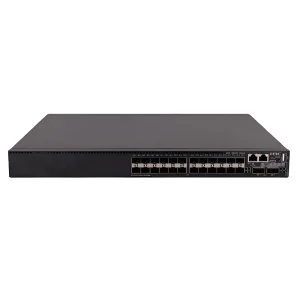
To support next-generation compute workloads, our design approach integrates PCIe switch systems, specialized server boards, and direct NVMe storage routing. By routing high-frequency lanes through high-speed switches directly on the motherboard, we bypass traditional storage bottlenecks. The diagram below illustrates how our high-performance component ecosystem works together to optimize data pathways:
Optical Transceivers
40G Core Switch
Low Latency Fabric
GPU Cluster & SSDs
Technical Roadmap & Future Outlook
Over the next decade, the industry will shift from traditional copper trace interconnects to co-packaged optics (CPO) and silicon photonics directly on the processor package. This change is necessary to overcome the physical limits of copper, which generates excessive heat and experiences severe signal attenuation at frequencies above 100 GHz. Additionally, the adoption of the **Compute Express Link (CXL)** standard will transform how data centers handle memory resources, allowing servers to share large pools of memory over high-speed PCIe connections with minimal latency. Our hardware roadmap is designed around these emerging technologies, ensuring that the platforms you build today will remain compatible with future generations of computing hardware.